
Mitsubishi Hack Stole Nuclear, Defense Data

When Mitsubishi announced in September it had been hacked in August it was criticized for keeping quiet for a month. Now it appears that the attackers got nuclear power plant and military aircraft details according to sources quoted in the Japanese media.
Share this:

Google Street View Moves Indoors

Google is taking its Street View mapping service indoors with plans moving ahead for 360-degree Business Photos, a program that would send Google photographers to various businesses to snap professional photos for their Places Page. ‘This experience, using Street View technology, includes 360-degree imagery of the business interior and storefront,’ says Google. ‘With this immersive imagery, potential customers can easily imagine themselves at the business and decide if they want to visit in person.’ Photographs are taken by ‘trusted’ photographers, though businesses can also upload their own images via Google Places. It’s starting with businesses ‘that we know are searched for most regularly,’ like restaurants, hotels, retail shops, gyms, salons, and repair shops. Taking internal photos and posting them online brings up some security questions, but Google says its photographs will ‘capture nothing different to what a customer would see by visiting the business in real life.’
Share this:
The Most Common Hiding Places for Workplace Passwords


The Most Common Hiding Places for Workplace Passwords
When I was an IT admin, I had the pleasure of dealing often with people who would submit urgent service requests and then leave for the day, leaving their office empty and computer locked by the time I could get there to help. Fortunately, I was often able to fix their problem while they weren’t there. Why? Their password was somewhere on their desk in one of these easy-to-find locations.
- Under the Keyboard. This is a pretty common one, and one of the first places to look if you need to find someone’s password (or one of the first places to avoid if you need to jot down an often-used but difficult to remember password.) The worst offenders leave them on a post-it on their keyboard tray, or under the spot where their keyboard lives. Others attach the post-it to the underside of the keyboard, thinking it’s better hidden there. In both cases, it’s a sure bet that anything under the keyboard will have a password on it.
- Under the Phone. A surprising number of people still keep their passwords tacked to the underside of their desk phone or its receiver. The people who usually put their passwords here think they’re being smart and stealthy, but in reality taping a yellow post-it note to the underside of your phone just screams “passwords here!”
- Under the Mouse Pad. This is another common hiding place for people who don’t want to put their passwords under their keyboard. They’ll usually slide a couple of sheets of paper under the mousepad with their usernames and passwords on it and refer to them when they forget, or update them when their password expires.
- On the Monitor. This one isn’t so much a “hiding place,” as it’s one of those “security through obscurity” techniques that almost never work. Most often practiced by people who keep dozens of other post-its on their monitor, this technique is still easy to get around as soon as you have physical access to the person’s computer. Besides, it’s not too hard to glance through the post-its on the monitor and find the one that has “u: something/p: something else” on it.
- In the Top Drawer. Most people who work in open offices with short cubicles tend to lock their desk drawers, but colleagues I’ve worked with who had their own offices or had semi-isolated cubicles were almost always guilty of leaving their desk drawers unlocked. When I would visit their offices, the master list of their usernames and passwords were almost always in the top drawer, on a scrap of paper or the top of a thick stack of post-it notes, usually in plain view.
- Under the Desk. One of the most disturbingly common spots many officer workers hide their passwords is one of the easiest to find: right under their desk surface. Just sit down at their desk and put your hand directly under the desktop, and you’ll often find yet another post-it note attached there. Most people who do this operate under the assumption that no one’s ever under their desk to see or notice such a thing—except the IT admin or help desk tech they call when they’ve jostled the Ethernet cable loose from the back of their desktop.
This list isn’t exhaustive: anyone who’s spent time as a field technician or IT admin in an office will tell you that people often leave their passwords in strange places that are easier to find then the user ever hoped they would be.
In many offices, the most common hiding spots for post-it notes and paper scraps laden with login information depend on the office furniture and office layout. For example, if your cubicles have low cabinets right over most users’ monitors, you can expect to find a few people keeping their passwords on the inside of those cabinets. I knew one person who put post-it notes on the bottom of their chair—she was livid when she arrived one morning to find a colleague had borrowed her chair for an impromptu meeting in her office next door.
If you keep your passwords in any of these places, stop now before it’s too late. You may be making your IT admin’s life a little easier when he or she drops by to fix your computer problems, but they know full well you’re sacrificing your organization’s security in the process. Now is a good time to give a service like LastPass, an app like1Password, or one of these great alternatives a try, so you can remember one password and then mix up the passwords you use for other services. While you’re at it, make sure you’re using good, strong passwords.
Do you know an office worker that keeps their passwords on post-its or in notebooks on their desk? How do you keep your passwords safe from prying eyes without compromising their security? Share your tips in the comments. Photo by Juan Martinez.
You can reach Alan Henry, the author of this post, at alan@lifehacker.com, or better yet, follow him on Twitter or Google+.
Share this:

Snuff
Snuff, Terry Pratchett’s latest Discworld novel is an absolute treat, as per usual. It’s a Sam Vimes book (there are many recurring characters in the Discworld series, whose life stories intermingle, braid and diverge — Sam Vimes is an ex-alcoholic police chief who has married into nobility) and that means that it’s going to be a story about class, about law, and about justice, and the fact that Pratchett can make a serious discourse on these subjects both funny and gripping and never trivial is as neat a summary of why we love him as much as we do.
In Snuff, Sam Vimes finds himself dragged off to the countryside for a first-in-his-life holiday, and of course, the holiday only lasts about ten seconds before Vimes is embroiled in local politics, which means local crime. The genteel countryside may be sleepy and backwards, but it is also seething with secrets, with privilege for the gentry, with class resentments, and with racism.
Goblins, you see, are universally reviled, thought incapable of rationality, and loathed for their weird religious habit of retaining all their snot, hair clippings, pus, fingernails and other castoffs (except urine, crap and teeth, strangely) in beautiful handmade pots that are buried with them. Also, they’ve been known to eat their young. Is it any wonder that they’re classed as vermin in law?
Well, yes, because as Sam Vimes discovers, there’s more to the story than the stuff “everyone knows” about goblins, and before you know it, he’s deep underground in a story that includes all the aforementioned, plus a small boy obsessed with learning everything there is to know about poo; a novelist who writes wildly popular icky novels for kids; a clan of corrupt magistrates who make up the law as it suits them; and a clutch of sweet maidens who need to be convinced to leave the drawing room and make their way in the wider world.
And we’re off — fights, chases, riverboats, sea-ships, kidnapping, murder, revenge, and the world belowstairs and above all come to life in a Pratchett novel that has all the things you want from Discworld: compassion, humor, smarts, and action. Thank you, Terry, for another good literary friend to join the rest on my shelf.
Share this:

How to Tell Someone You Don’t Like Them (Without Being an Asshole)

It would be fantastic if we could all just get along, but if you’ve met a handful of people in your life you know that’s not a very realistic expectation. Sometimes, despite your best efforts, you simply have to tell someone that it’s not working out. Whether you’re breaking up with a lover, letting go of a friend, or just trying to shake someone annoying, here’s how to get the awkward job done.
First of all, there’s always more than one way to handle an awkward social situation. No suggestion is going to work every time. You need to survey the atmosphere, consider the person you’re dealing with, and remember your ultimate goal or reason why you’re breaking this bad news. I’ve been in this situation far too often and I’m still a far cry from an expert, so I asked people who are as well as a handful of regular people on the internet. Here’s what I learned.
Be Sure You’re Making the Right Decision
 Rejection is unpleasant for everyone involved, and telling someone you don’t like them is probably one of the worst types. For that reason, you don’t want to make the decision lightly. You should be certain you don’t want this person in your life in a certain capacity or at all before you figure out how to tell them. Doctoral Clinical Psychology student and intern therapist Brian Newton suggests you first consider your goals:
If say a client asked me, “How do I tell X that I don’t like them?” my first question would be why they wanted to tell the person that; what their objective is. There are plenty of people in our lives that we don’t like, but it’s not always effective to tell them that, it doesn’t further our goals. If someone doesn’t like their boss and they need their job, telling them that is probably not effective toward what they actually want. So, in fact, I’d say the more useful question is, “What do I want from this person?”
If you want this person out of your life, you have to consider the situation as well. As Brian notes, telling your boss you don’t like them isn’t going to be terribly helpful. When your goal is to remove your boss from your life, it’s probably a lot easier to just find another job. If you have an annoying co-worker, you’ll probably want to consult with your human resources department before taking any action yourself. Personal relationships offer a little more freedom, but you don’t necessarily want to burn a bridge if unnecessary. Be sure to weigh your options and consider possible outcomes. Sometimes it makes more sense to simply put little effort into a personal relationship than to end it. If you feel ending it is in your best interest, however, read on.
Don’t Be a Douche Bag
 I’d like to think it goes without saying that you shouldn’t be mean when you’re telling someone you don’t like them. After all, the interaction is already unpleasant and even if they feel the same way about you, it’s still something that hurts to hear. That said, I’ve known people to be insensitive simply because it’s easier and I’ve known myself to be mean unintentionally. Sometimes you just screw it up, but you can at least try to be kind. As marriage and family therapist Roger Gil points out, it’s not only the right thing to do but it’s actually in your best interest in the log run:
It’s always important to respect another person’s feelings (as long as they aren’t disrespecting yours or crossing boundaries). Besides, being mean to your “rejectee” might get back to someone you do want to date and give you a “douche bag” reputation.
I’ve probably acquired the “douche bag” label with a few people unintentionally. Sometimes I’ve attempted to be nice, but nice can often come across as misleading. If I’ve learned anything from my mistakes, it’s important to find the line between being firm and being respectful. Being firm is often necessary for clarity and can sound harsh, but it’s generally better than providing people with uncertainty. The confusion ultimately hurts more in the long run.
Prepare Ahead of Time and Plan for Awkward
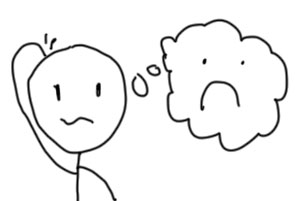 As humans, we like to try and remove awkwardness and conflict from every situation but it’s often inevitable. It’s better to understand that some situations will be unpleasant, accept that reality, and believe that a little discomfort now will save a lot of discomfort down the road. There will also be times when you’ll be surprised by someone’s interest, so it can help to have a few responses at the ready to avoid creating additional problems. Robert Gil elaborates:
In preparing canned responses, it’s important to be honest. “I have a boyfriend/girlfriend” or “I’m not looking to date anyone right now” aren’t good responses if they aren’t the truth because if your rejectee sees you behaving very single-like or sees your online dating profile, you just created the awkward situation you wanted to avoid. I would say something like, “I’m really flattered. You seem like a nice person but I just don’t see you that way. I admire your assertiveness, though.” The idea is to state the truth while communicating respect for the other person. If they are relatively “normal”, they’ll take this as a cue to walk away with their pride intact. If they become insistent, don’t respect your wishes, or make a scene, then rest assured that it’s their issue and stick up for yourself in an appropriate way.
When ending a non-romantic relationship, you won’t be able to give a response. You’re going to have to bring up the bad news, and this is always uncomfortable. Of course you want to be as kind and gentle as possible, but when you’re telling you don’t want to be friends it’s important to remember two things: be clear and definitive. When you’re coming up with a prepared response, avoid statements like this:
“I don’t think we can be friends anymore.”
The problem words here are “I don’t think.” This leaves room for interpretation and additional questions that will be uncomfortable to answer. The person you’re rejecting may ask why you don’t think so, then try to provide counterarguments. What works better is a statement like this:
“I don’t want to be friends anymore.”
This sounds harsh to read, and you can certainly preface the statement with a some softer language to make it easier to swallow (e.g. “I need to tell you something difficult and I apologize for saying it like this because I don’t want to hurt you, but I want to be as clear as possible”). Chances are you will be asked to explain why regardless of how you say it, so be prepared to offer an explanation that has more to do with you than it does with them. You don’t want to fall into “it’s not you it’s me” territory, but you also don’t want to leave room for endless questions and argument. Simply stating that you don’t enjoy spending time with them should be more than enough. This is a harsh thing to say, but the alternative can be much worse. You don’t want to spend the next hour explaining every reason why, and they don’t want to hear it. When a person asks a lot of questions it’s generally because they want to try to change your mind. If you’re sure you do not want this person in your life, it’s better to withhold most of the details. Just because you don’t like one (or several) aspects of their personality doesn’t mean somebody else won’t, and there’s no sense in making them think who they are is bad. Unless they exhibit universally terrible behavior and telling them would benefit everyone they ever meet, it’s really not your place to judge another for who they are. The only judgment you want to make is whether or not they are compatible with you.
Understand How People Like to Receive Bad News
 When I asked Lifehacker readers and other people on the web how they would prefer to receive the bad news themselves, the answers varied quite a bit. For the most part, people fell into two camps: either they preferred to hear the bad news quickly and rip the bandage off, or they simply wanted no confrontation whatsoever and wanted to get the tacit message through a lack of contact. So how do you tell what a specific person prefers? You ask.
As awkward as this may sound, it’s actually easy to do in almost any context. When you’re getting to know a person, you simply bring up a situation where you had to break this bad news to someone in the past. All you have to say is that you weren’t sure how to handle it, as that is essentially a request for advice. Whoever you’re talking to will tell you how they’d want to be told, and should you ever need to tell them you don’t like them you’ll know exactly how to go about it. Knowing won’t remove the discomfort from the situation, but at least you can rest-assured you’re not approaching the conversation blindly.
You can prepare as much as you want, but ultimately you don’t know what’s going to happen. Your best efforts could result in a problem. Sometimes you’ll make mistakes and it will be your fault, and sometimes you’ll find the person you’re dealing with is emotionally volatile. It’s a rough situation and it’s okay to feel badly for a little while. If you do, it means you actually give a crap about other people and that’s a good thing. Just don’t dwell on the bad feelings too long. At some point you’ll probably meet somebody who will have to tell you the same thing. They may make mistakes, too, so be forgiving. Nobody’s pefect.
A big thanks goes out to Roger S. Gil, M.A.M.F.T. and Brian Newton, MA, for their contributions to this post. You can follow Roger on Twitter and check out his podcast. If you’re looking for more information on interpersonal skills, Brian recommends reading the Interpersonal Effectiveness section of the book Dialectical Behavior Therapy. You can learn more about it here.
You can follow Adam Dachis, the author of this post, on Twitter, Google+, and Facebook. Twitter’s the best way to contact him, too.
Share this:

Japan’s Largest Defense Contractor Hacked
Mitsubishi Heavy Industries Ltd, Japan’s largest defense contractor, has been a victim of a cyber attack, according to a report from the company. The company said attackers had gained access to company computer systems, with some reports saying the attacks targeted its submarine, missile and nuclear power plant component businesses. According to The Yomiuri newspaper, approximately 80 systems had been infected with malware at the company’s headquarters in Tokyo, as well as manufacturing and research and development sites, including Kobe Shipyard & Machinery Works, Nagasaki Shipyard & Machinery Works and Nagoya Guidance & Propulsion System Works. ‘We can’t rule out small possibilities of further information leakage but so far crucial data about our products or technologies have been kept safe,’ a Mitsubishi Heavy spokesman told Reuters. ‘We’ve found out that some system information such as IP addresses have been leaked and that’s creepy enough,’ the spokesman added.
Share this:
Dating Tips for the Modern Woman.
Share this:
When Clowns become Sages.
I’m a cynic, it helps in my line of work, but despite my resistance, this speech and video truly had an impact. I hope it will for you too.
It’s old and many of who will have seen it various forms over the years, this version may be the best of them all.
The speech itself is from a comedy directed called “The Great Dictator” written by and starring Charlie Chaplin. First released in October 1940, Chaplin plays two characters who look strikingly similar- a jewish barber and a dictator who looks like Adolf Hitler. Near the end of the film, after a series of bizarre incidents, the dictator gets replaced by his look-alike, the barber, and is taken to the capital where he is asked to give a speech.
It’s worth watching because the speech is as relevant today as it was 71 years ago. The full transcript of the speech can be found below the video.
I’m sorry but I don’t want to be an Emperor – that’s not my business – I don’t want to rule or conquer anyone. I should like to help everyone if possible, Jew, gentile, black man, white. We all want to help one another, human beings are like that.
We all want to live by each other’s happiness, not by each other’s misery. We don’t want to hate and despise one another. In this world there is room for everyone and the earth is rich and can provide for everyone.The way of life can be free and beautiful.
But we have lost the way.
Greed has poisoned men’s souls – has barricaded the world with hate; has goose-stepped us into misery and bloodshed.
We have developed speed but we have shut ourselves in: machinery that gives abundance has left us in want. Our knowledge has made us cynical, our cleverness hard and unkind. We think too much and feel too little: More than machinery we need humanity; More than cleverness we need kindness and gentleness. Without these qualities, life will be violent and all will be lost.
The aeroplane and the radio have brought us closer together. The very nature of these inventions cries out for the goodness in men, cries out for universal brotherhood for the unity of us all. Even now my voice is reaching millions throughout the world, millions of despairing men, women and little children, victims of a system that makes men torture and imprison innocent people. To those who can hear me I say “Do not despair”.
The misery that is now upon us is but the passing of greed, the bitterness of men who fear the way of human progress: the hate of men will pass and dictators die and the power they took from the people, will return to the people and so long as men die [now] liberty will never perish…
Soldiers – don’t give yourselves to brutes, men who despise you and enslave you – who regiment your lives, tell you what to do, what to think and what to feel, who drill you, diet you, treat you as cattle, as cannon fodder.
Don’t give yourselves to these unnatural men, machine men, with machine minds and machine hearts. You are not machines. You are not cattle. You are men. You have the love of humanity in your hearts. You don’t hate – only the unloved hate. Only the unloved and the unnatural. Soldiers – don’t fight for slavery, fight for liberty.
In the seventeenth chapter of Saint Luke it is written ” the kingdom of God is within man ” – not one man, nor a group of men – but in all men – in you, the people.
You the people have the power, the power to create machines, the power to create happiness. You the people have the power to make life free and beautiful, to make this life a wonderful adventure. Then in the name of democracy let’s use that power – let us all unite. Let us fight for a new world, a decent world that will give men a chance to work, that will give you the future and old age and security. By the promise of these things, brutes have risen to power, but they lie. They do not fulfil their promise, they never will. Dictators free themselves but they enslave the people. Now let us fight to fulfil that promise. Let us fight to free the world, to do away with national barriers, do away with greed, with hate and intolerance. Let us fight for a world of reason, a world where science and progress will lead to all men’s happiness.
Soldiers – in the name of democracy, let us all unite!
Share this:
Find out Apache Version
 In order to find out apache version, login to your server. Once logged in type the following command to print the version of httpd :
# httpd -v
Sample output:
Server version: Apache/2.2.3
Server built:   Oct 28 2008 07:22:45
Output a list of modules compiled into the server:
# httpd -l
This will not list dynamically loaded modules included using the LoadModule directive. To dump a list of loaded Static and Shared Modules:
# httpd -M
Sample output:
Loaded Modules:
 core_module (static)
 mpm_prefork_module (static)
 http_module (static)
 so_module (static)
 auth_basic_module (shared)
 auth_digest_module (shared)
 authn_file_module (shared)
 authn_alias_module (shared)
 authn_anon_module (shared)
 authn_dbm_module (shared)
 authn_default_module (shared)
 authz_host_module (shared)
 authz_user_module (shared)
 authz_owner_module (shared)
 authz_groupfile_module (shared)
 authz_dbm_module (shared)
 authz_default_module (shared)
 ldap_module (shared)
 authnz_ldap_module (shared)
 include_module (shared)
 log_config_module (shared)
 logio_module (shared)
 env_module (shared)
 ext_filter_module (shared)
 mime_magic_module (shared)
 expires_module (shared)
 deflate_module (shared)
 headers_module (shared)
 usertrack_module (shared)
 setenvif_module (shared)
 mime_module (shared)
 dav_module (shared)
 status_module (shared)
 autoindex_module (shared)
 info_module (shared)
 dav_fs_module (shared)
 vhost_alias_module (shared)
 negotiation_module (shared)
 dir_module (shared)
 actions_module (shared)
 speling_module (shared)
 userdir_module (shared)
 alias_module (shared)
 rewrite_module (shared)
 proxy_module (shared)
 proxy_balancer_module (shared)
 proxy_ftp_module (shared)
 proxy_http_module (shared)
 proxy_connect_module (shared)
 cache_module (shared)
 suexec_module (shared)
 disk_cache_module (shared)
 file_cache_module (shared)
 mem_cache_module (shared)
 cgi_module (shared)
 version_module (shared)
 chroot_module (shared)
 perl_module (shared)
 php5_module (shared)
 proxy_ajp_module (shared)
 python_module (shared)
Syntax OK
Print the version and build parameters of httpd, and then exit
Type the command:
# httpd -V
Sample output:
Server version: Apache/2.2.3
Server built:   Oct 28 2008 07:22:45
Server's Module Magic Number: 20051115:3
Server loaded:  APR 1.2.7, APR-Util 1.2.7
Compiled using: APR 1.2.7, APR-Util 1.2.7
Architecture:   64-bit
Server MPM:     Prefork
  threaded:     no
    forked:     yes (variable process count)
Server compiled with....
 -D APACHE_MPM_DIR="server/mpm/prefork"
 -D APR_HAS_SENDFILE
 -D APR_HAS_MMAP
 -D APR_HAVE_IPV6 (IPv4-mapped addresses enabled)
 -D APR_USE_SYSVSEM_SERIALIZE
 -D APR_USE_PTHREAD_SERIALIZE
 -D SINGLE_LISTEN_UNSERIALIZED_ACCEPT
 -D APR_HAS_OTHER_CHILD
 -D AP_HAVE_RELIABLE_PIPED_LOGS
 -D DYNAMIC_MODULE_LIMIT=128
 -D HTTPD_ROOT="/etc/httpd"
 -D SUEXEC_BIN="/usr/sbin/suexec"
 -D DEFAULT_PIDLOG="logs/httpd.pid"
 -D DEFAULT_SCOREBOARD="logs/apache_runtime_status"
 -D DEFAULT_LOCKFILE="logs/accept.lock"
 -D DEFAULT_ERRORLOG="logs/error_log"
 -D AP_TYPES_CONFIG_FILE="conf/mime.types"
 -D SERVER_CONFIG_FILE="conf/httpd.conf"
To view other configuration settings open httpd.conf file (usually located in /etc/httpd directory).
Red hat, CentOS and Fedora stores httpd at the following location:
# vi /etc/httpd/conf/httpd.conf
Debian and Ubuntu stores httpd.conf in apache2.conf file at the following location:
# vi /etc/apache2/apache2.conf
FreeBSD stores apache2.2 configuration at the following location:
# vi /usr/local/etc/apache22/httpd.conf
If you made any changes to httpd.conf, check httpd syntax for error using the -t option:
# httpd -t
If there are no errors, simply restart Apache web server.
Share this:






Priorities. Operation Bart.

After BART shut down cell service in response to a protest last week over the death of a man whom BART cops shot, hacktivists Anonymous responded with a protest of their own. The hackers and hundreds of others got together and marched in protest from station to station as police in riot gear ran to responded to the peaceful demonstration.
The UN goes mental when Egypt, Iran, Syria, or any other oppressive regime shuts down cell service. The UN is the first group to rightly oppose this type of action… unless of course the US wants to do it to its own citizens.
As mentioned in the following speech, the first thing BART cops did after shooting man in back? Confiscate video of the shooting.. even before alerting medics.
Share this:
Patent for a combination sparrow-catcher / cat-feeder
From Futility Closet: Patent #4150505 for a Bird trap and cat feeder, issued on April 24, 1979
Why spend money on cat food when there’s a more immediate solution? Leo Voelker’s 1979 invention simultaneously curbs the local sparrow population and keeps the local cats occupied.The birds enter the housing at the top but can escape only through the mesh cage at the bottom, which serves as a kind of self-serve food dispenser for neighborhood cats.
“The cat feeder by its design is self-cleaning since the cat quickly learns to remove the sparrow from the cage.”
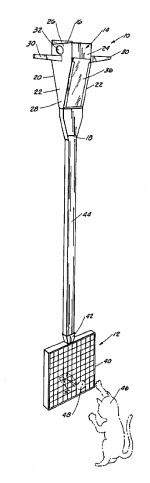
Patent for a combination sparrow-catcher / cat-feeder
Share this:

Amazon.com has a great price on 50-packs of whippets right now.

Today I learned that if you really, really, really like whipped cream (and I am not implying that this product can be used for any other purpose), you can buy 50-packs of Whippets for $99,999 on Amazon (Regular price: $28.99). Put me down for three, thanks.

Whip-It! Brand: The original; Reflecting over 60 years of manufacturing expertise. Food grade N2O is used as a propellant for whipping cream, which dissolves in the liquid cream. As the cream is released from the whipper, the gas expands and in doing so whips the cream into foam.
Share this:

BOOBIES & KITTENS!
Are you feeling down?
Need something to cheer you up?
Here’s the cure:
Share this:
Punchfork Discovers Recipes via Social Network Trending

You can waste all day trying to find the best ratatouille recipe from hundreds of food sites, reading each recipe and hoping for a photo or review to give guidance. Instead, give Punchfork a try; it uses tweets and Facebook likes to rate recipes by popularity from top culinary sites such as 101 Cookbooks, Serious Eats, and The Kitchn.
You can search Punchfork by recipe name or ingredient. Search results include a photo, popularity rating, source web site, and social activity mentioning the recipe. Clicking on the recipe will give you the full ingredients as well as options to share the recipe on your own social networks, but you must follow a link to the originating source for the full recipe.
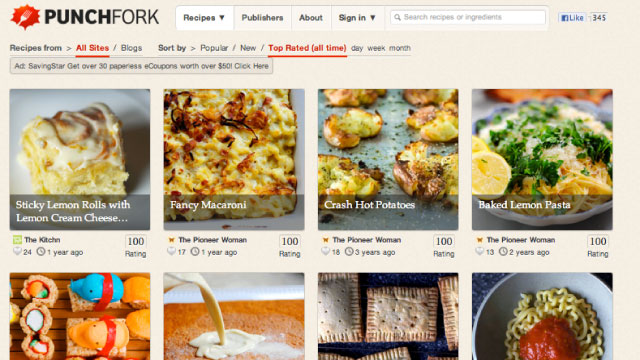
I like Punchfork. It currently has a few thousand recipes from 35 major and minor culinary sites. My search for ratatouille resulted in 32 recipes, all with glorious photographs, fromratatouille phyllo wraps to Pixar film Ratatouille’s version of ratatouille.
Share this:

Iron Man vs Bruce Lee
Ever wonder who would win in a death match between Bruce Lee and Iron Man?
Share this:

People of Walmart Video Edition
Whoa. You were “horrified”?
Maybe you should spend less time thinking about yourself and more time thinking about showing courtesy to others. Or maybe you should spend a lot more time thinking about yourself and realize you look ridiculous walking around like that in public. The differences between self-confidence and dignity can be subtle, but they exist.
However the story ends on a happy note: She says she’ll “never shop at Walmart again.” That’s one terrible Walmart customer down, millions to go.
By the way, Molly Blancett, you can wear that black bikini top in my Walmart any day. Rawr.
Share this:


Honk for Grandma!

She’s probably not dead. When you’ve got a family of fifteen, someone has to ride on the roof.
Share this:

Women’s Motocross At The X Games Did Not Go Well
Umm, yeah. Well…have you seen us do gymnastics?! We’re fantastic at that!
Share this:
Would You Like a Receipt, Sir?

8.1% sales tax??? This is why I take all my prostitution needs to Thailand.
But in case you were wondering, this is fake. You can tell because a “Happy Ending” costs way more than $50.


 RobDurdle.com
You must be logged in to post a comment.