
Jewish Jester
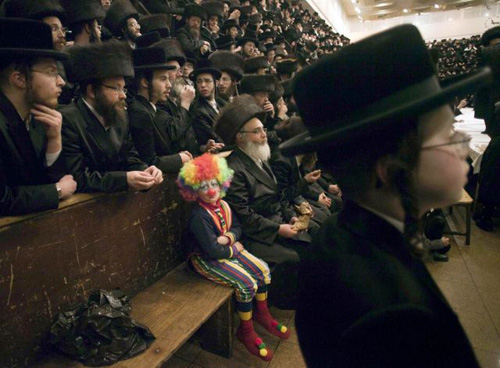
Clowning around in synagog is unacceptable, Anne Frankly I won’t stand for it.
Share this:

Batman was pulled over for speeding.

In other news, Gotham looks goddamn beautiful in the daylight. Who knew.
Share this:

Why Daylight Saving Time Is Pointless


Ugh. You’re up an hour early, your body hates you for it, and even a gallon of coffee can’t get your day on track. Daylight savings sucks. But you know the worst part? It doesn’t have to be like this.
Daylight savings isn’t as old as you think it is. First suggested by Benjamin Franklin, in 1784, it was then shot down by many very sensible people as being pointless. Then, in the First World War, it was introduced—first by the Germans—to save coal during war-time.
Somehow in that age of austerity, the concept soon caught on and everyone started doing it. Sadly, nobody’s really thought to change back. Except Arizona, and it hasn’t fallen off the face of the planet as a result.
But oddly, some people still support the use of daylight savings: they say it saves energy, promotes a healthy lifestyle, and reduces traffic accidents. So let’s bust the myths now and make it clear that daylight savings needs to go.
Daylight Savings doesn’t save energy…
The Germans introduced daylight savings to lower fuel costs. The idea is that, while changing the clocks reduces the use of artificial lighting in the evening but increases use in the morning, the evening reduction outweighs the morning increase.
Great—but that was a century ago. Recent studies point out that, at best, DST might cut the US electricity usage by 1% during March and April. Other estimates, by the National Bureau of Standards, suggest it has zero effect.
…cut accidents…
Many folks point to the fact that DST reduces the incidence of road traffic accidents as a good reason to keep using the system. In fact, the data surrounding road safety disagree widely. Some studies show that it makes no difference, others suggest a 0.7 per cent reduction in traffic fatalities during DST. When the data’s that limited, it’s not enough to base a decision on.
…or make us any healthier…
It’s true that DST does provide extra daylight in the evening, and that it may bring with it increased physical activity and reduced incidence of depression. But there is plenty of evidence that changing the clocks by an hour can have a harmful effect on our health.
Clock shifts disrupt our circadian rhythms. Studies have shown that, around the times of the spring clock changes, there are spikes in suicide rates and an increase in the number of recorded heart attacks. In fact, when Kazakhstan ditched DST in 2005, it cited health reasons. Sure, it might make you go for an extra jog or two every year, but it might also help contribute to a heart attack. I know which I’d prefer.
…but is incredibly disruptive.
So, none of the arguments for maintaining DST weigh up. I have one, very large, argument to support scrapping it, though: it loses the US billions of dollars every year. It damages retail, affects the stock market in a negative way, and even disrupts agriculture.
A century ago, we didn’t have results to tell us whether DST made a real measurable impact; it was acceptable to run with it because, for all we knew, it was useful. Now, we know better. Day light savings sucks—and we need to get rid of it.

William Willett, inventor of daylight saving time.
Share this:







Interwebs!
The internet has been commercially available for over 20 years. We live our day to day lives on it and in most cases run our businesses through it.
This brings me to one very important question that has been plaguing me for over a decade.
Why the fuck are there people who still don’t know how to use it?
 There is only one excuse/reason someone would not know how to use something as incredibly awesome, as all powerful, and as insanely important as the internet . That reason is a flat out refusal to learn. This is aggravating and ignorant.
Why should people like me have to hold hands of those choose not to learn?
“Hello? Oh hi! What do you mean you don’t know where to check your e-mail? What provider are you using? Ok, pick a provider and set up an e-mail account.”
You wanna know why IT people have such a high and mighty attitude? Because what should be common knowledge by now, isn’t. Not having basic internet skills is the like going through life without ever learning to talk and then wondering why nobody understands you.
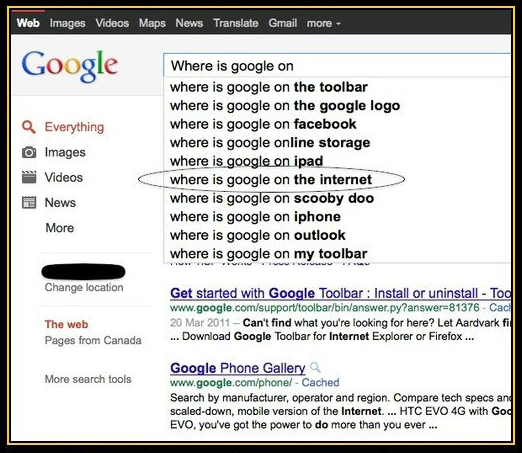
This is 2012. The Age of Information. The web is our language. Speak it or die. This isn’t directed at anyone in particular. I’ve just noticed an abundance of grown-ass people who still can’t figure out how to use a search engine…among other things. If you don’t know how to do something, Google it!
Share this:

Optimus Prime narrates for NASA
When Optimus says jump, the appropriate response for me is always “how high”. No but really though. If some transport truck transformed into a giant robot armed to the teeth with guns, then you better believe I’ll do what he says. Us bots gotta stick together, know what I’m sayin’?
As awesome as this video is (and trust me I’m already filling out my NASA application), I kept expecting Peter Cullen to say Optimus’ famous quote from the original cartoon:
“Impressive…for primitive rocket technology.”
Check out NASA’s video below narrated by the Big Boss himself. Now transform and roll out!
Share this:

She’s Ollieing for Two Now


This is what abortions will look like if Rick Santorum is elected president.
Share this:

Ten Signs You Are a Good/Unquestioning Christian

1 – You vigorously deny the existence of thousands of gods claimed by other religions, but feel outraged when someone denies the existence of your god.
2 – You feel insulted and dehumanised when scientists say that people evolved from lesser life forms, but you have no problem with the biblical claim that you were created from dirt.
3 – You laugh at polytheists, but you have no problem believing in a trinity god.
4 – Your face turns purple when you hear of the atrocities attributed to allah, but you don’t even flinch when hearing about how god slaughtered all the babies of Egypt in the book of exodus and order the elimination of entire ethnic groups in joshua, including women, children and animals.
5- You laugh at hindu beliefs that defy human and Greek claims about gods sleeping with women but you have absolutely no problem believing that the “holy spirit” impregnated Mary who then gave birth to a man god who got killed, came back to live and then ascended into the sky.
6 – You are willing to spend your time looking for little loopholes in the scientifically established age of the Earth (4.55 billion years) but you find nothing wrong with believing dates recorded by pre-historic tribesmen sitting in tents having a guess that the world is only a couple of thousand years old.
7 – You believe that the entire population of this planet with the exception of those who share your beliefs –though excluding those in all rival sects will spend eternity in an infinite hell of suffering. Yet you consider your religion the most “tolerant and loving”
8 – While modern science, history, biology and physics have failed to convince you otherwise some idiot rolling around the floor speaking in tongues may be all the evidence you need.
9 – You define 0.01% as a “high success rate” when it comes to answered prayers. You consider that to be evidence that prayer works and you think that the other 99.9% was simply the will of god
10 – You actually know a lot less than many atheists, agnostics do about the bible, christianity and church history, But still call yourself a christian
Share this:



The Rest Is Silence


Laertes
…he…may give his saying deed…no further
Than the main voice of Denmark goes withal.Claudius
Be as ourself in DenmarkHamlet
O God, I could be bounded in a nut shell and count myself a king of infinite space, were it not that I have bad dreams.Guildenstern
Which dreams indeed are ambitionHamlet
….To die, to sleep;
To sleep: perchance to dream: ay, there’s the rub;
For in that sleep of death what dreams may come
When we have shuffled off this mortal coil,
Must give us pause:
Hamlet at heart is just a student who wants to return to Wittenberg. But he cannot breach the custom that unites a king (or his heir) with his kingdom. He cannot reform his “old stock.” His choice is not his own – he is subject to the “voice of Denmark.” Both his father and his uncle want him to be like them “in Denmark.” Hamlet’s dilemma is whether “to be or not to be”…”so like the king THAT was and IS THE QUESTION of these wars.” He kills Claudius only after he knows that he himself is dying, so he can avoid inheriting the kingdom and being dragged into hell by his union with it, as Claudius was.
In the end he finallly silences the “voice of Denmark” (or at least passes it over to Fortinbras – “he has my dying voice”) – going to his final rest, free from dreams of ambition. “The rest is silence.”
Share this:

Litany Against Fear
All together now, wherever you are:
I must not fear.
Fear is the mind-killer.
Fear is the little-death that brings total obliteration.
I will face my fear.
I will permit it to pass over me and through me.
And when it has gone past I will turn the inner eye to see its path.
Where the fear has gone there will be nothing.
Only I will remain.
Share this:
Since creation is an event in time, how could god create time?
Is creation necessarily an event in time ? I realize that it seems ludicrous to suggest otherwise, but the statement in itself implies that without time and space there can be no existence or perception. Being creatures that are aware of only this existence in a dimension where time and space are integral to every thought and concept we have, it would be very hard to believe there is a reality where the rules of time and space are not so rigid (or exist at all).
Example: Prior to space and time, God decided to create space and time (and everything in it ; the universe). Even our language is designed in a way which makes it difficult to even discuss a reality that is not based on space and time. To say the word ‘prior’ in the first sentence implies there was a prior – a prior to the creation of space and time. How can we talk about before and after without time ?? The whole thing is paradoxical.
So does that mean that in a reality where time and space don’t exist, all events happen at once ? What does ‘at once’ even mean without time ? And what does the word ‘all’ mean without space ? Usually, when we say all we are summing a group of things the things are separated by space.
Very frustrating. So it seems to show that there is no world without time and space.
Then we have quantum physics. I don’t profess to be an expert about the subject, but it is interesting. If you happen to believe that the physicists of this world are knowledgeable (I do) then you might have a difficult time reconciling common sense with the world of quantum physics where the building blocks or our universe can exist in various states. Things at the subatomic level can exist in several places at once. Things can have multiple outcomes (electron can be detected at point B or point A depending on who looks at it and how). Experiments have been performed that seem to indicate that something you do right this instant can affect (at the subatomic level) something in the past. Light has recently been ‘frozen’ inside a structure and then released to become light again (much later).
Since we’re all made of subatomic particles, our bodies – the whole universe is based on things that have no concrete location (space) and can exist in multiple places at once (space and time). Couple this with the experiment where things in the past can be affected with things you do today (time) and I’m back to being frustrated again. My perception in daily life seems to indicate a world of absolutely nothing but one based on time and space yet the physicists are demonstrating that the rules of time and space are not so absolute.
A part of me likes your (Dave) argument because it just makes sense. But in light of all the rules of quantum physics, it doesn’t seem as cut and dry anymore. Maybe we’ll discover that it is possible to create time and space without having to exist in time and space. That there’s a reality outside of that. ??? That time and space is more of a perception or a side effect of simply existing in the universe in which we inhabit ???
I’m sure this post seems confused (as I usually am) and contrived but these are real suspicions that I have. But as a non-believer in God, If I had to pin myself down to a religion or belief it would have to be one of science. I know it’s not a God based religion (more of the Einstein type of religion) but I use it to try to help me decide where I might go after I die and why I’m here – and that seems to be a major part of organized religion.
So when I hear about the implausibility of a God out of time and space creating time and space, I have to take issue with it. It makes just as much sense as a purely scientific theory of everything just existing because it just exists. Or everything being created (including time – including the law of thermodynamics ?) due to the big bang (essentially something being created from nothing). Even scientific answers just seem to answer one question with a different one.
So, I don’t think it’s too surprising that people turn to religion to get answers/comfort, but I hope they consider there’s a fascinating reality right here that they can see, hear, touch and feel.
Share this:
Proof of the non-existence of a god
Some people falsely believe that it is impossible to prove the unexistence of anything, but they are wrong. It can, for example, be proved that there is no even prime number greater than two. Other people use to say that there is no way to prove if there is a god or not, or even that we cannot get any knowledge of god (agnosticism). My opinion as a strong atheist, is that we can in fact prove that god does not exist in the physical world. This document is my attempt to do so.
Definition of the word “god”
To prove the non-existence of god we first need to define the word “god”. When christians talk about god they mean an almighty being. This, I think, is the only god that holds, since it is the only god that can be logically justified.
I think it makes most sense if god is female, because only women can give life. Something that even people in the Stone Age understood. Later when wars affected the cultural evolution, and men took control of society, god became male, but the female god still lives on in the expression “Mother earth”. It should also be pointed out that an omnipotent god must be either androgyne or sexless. However, in most religions god is male so I will refer to god as ‘he’, ‘him’ etc.
Some people (Einstein for instance) believe in a god who is not a personal god, but a Spinozan kind of god. I claim that this god is not a god! To say that god is universe – by getting knowledge of the universe we get knowledge of god – is to redefine the meaning of the word god. This has nothing to do with the word god as it was defined by the “primitive” cultures which preceded our present civilization. He can be excluded with Occam’s razor, and most important: Such a god does not hear prayers.
If god is not omnipotent there is nothing that prevents him from being a product of the universe. If that is the case, what makes god divine? Then god would only be an alien, a being of matter; probably containing flesh, blood and DNA like all life we know of. Everything god is able to do would be things that human beings also will be able to do, all his knowledge would be knowledge we will also achieve. In fact humans would be gods, which should lead to some strange kind of humanism!
Many people justify their faith with god as an explanation. What is the meaning of life? Where does time and space come from? Who created the physical constants? et cetera. Because we lack knowledge of these things – and maybe never will, since they are questions like “what is the color of a second?” or “how does sound taste?” – god is there as an explanation.
Let’s say that god is the meaning of life, what then is the meaning of god? If god has a nature, who created that nature? If god created time and space, how can god exist without it? Since creation is an event in time, how could god create time? and who created god? To answer these questions god must be almighty, or else you can’t explain them. In fact you can if you say god stands above time and space and so on (which he indeed does if he is almighty), but to be able to prevent god from being tied to future phenomena, you must give him the quality of omnipotence so he can stand above everything.
The qualities of an omnipotent god
If god is almighty there are several qualities he must have. They are as follows:
He must know everything. Everything that is, everything that has been and everything that will be. To be able to know everything that will be he must know every position and every momentum of every particle in cosmos (Laplace’s “World Spirit”).
He must be worth our worship. A being that is not worth worshipping is no god.
He must be able to do anything. If there are things that god can’t do, he certainly is not omnipotent.
He must be above time. Something that even St. Augustine deduced. But not only that, god must stand above all possible dimensions.
He cannot be ‘good’ or ‘evil’ or, indeed, have any subjective characteristica. If god is all good, he cannot do evil things and cannot be almighty. Most people would object and say that good can do evil but chooses not to do it. Well, if god is all good he can’t choose to do evil things, can he?
The theodicé problem
We also have the theodice problem, stated by David Hume:
If the evil in the world is intended by god he is not good. If it violates his intentions he is not almighty. God can’t be both almighty and good. There are many objections to this, but none that holds since god is ultimately responsible for the existence of evil. Besides, if only god can create he must have created evil. If somebody else (the devil) created evil, how can one know that god, and not Satan created the universe?
The ontological evidence against gods
Neccesary in a god is a being that is worth worshipping, so if there is no being worth worshipping there cannot be a god.
Not any of the existing religions can provide such a god. How do we know if there are no undiscovered beings worthy our submission? Well if there is a being that has either failed or not tried to communicate with us that being is not worth worshipping either, so the ontological evidence against god holds, even without complete knowledge of the world.
There is a test, based on the ontological evidence against god, that you can do to try the existence of god. Pray, and ask god to provide you with a clear proof for his existence within a week. After that week, if you have got a proof that god exists, send me the evidence. If not, there are only three reasons I can think of that are plausible: (1) God does not exist, (2) God does not want to or (3) God can’t give you this evidence. Because of the ontological evidence, alternative (2) and (3) are not worth your worship and thus they equal alternative (1). So if you get no response there is no god.
The meaning of the word existence
What do we mean by existence? The very definition for existence is that a thing is said to exist if it relates in some way to some other thing. That is, things exist in relation to each other. For us, that means that something is part of our system (‘The known world’). God is defined to be infinite, in which case it is not possible for there to be anything other than god because “infinite” is all-inclusive. But if there is nothing other than god then either god cannot be said to exist for the reason just explained, or god is the known world, in which case, by definition, god is not a god.
Occam’s razor
Occam’s razor was formulated by William of Occam (1285-1349) and says: “Non est ponenda pluralites sive necessitate” or in english: “Do not multiply entities unless necessarily”. It is a principle for scientific labour which means that one should use a simple explanation with a few explanatory premises before a more complex one.
Let’s say that everything must be created, and that was done by an omnipotent god. A god which stands above time, space, moral and existence, which is self containing and in it self has it’s own cause. This entity can surely be replaced by the known world. The world stands above time, space, moral, existence, is self containing and in it has it’s own meaning. Most theists agree that god has a nature. Then we must raise the question, who created god’s nature? If we just accept that god has a nature and exists without a cause, why not say that the known world just is and that the laws of physics are what they are, without a cause?
God is not really an explanation, only a non-explanation. It is impossible to gain information from non-information so God as an explanation is a dead end. When we have said that the reason for something is that ‘god did it that way’ there is no way to understand it any further. We just shrug our shoulders and accept things as they are. To explain the unknown by god is only to explain how it happened, not why. If we are to investigate the world and build our views of life from the world, we cannot assume a god. Because adding god as an explanation leaves as many, if not more questions than it explains, god has to be removed with Occam’s razor if we are serious in investigating the world.
Some things are impossible to do:
There are things that are impossible to do. For example nobody can cover a two-dimensional surface with two-dimensional circles, without making them overlap. It is impossible to add the numbers two and two and get 666. You can not go back in time (without passing an infinite entropy barrier). The number of things that are impossible to do are almost infinite. If god were to be almighty he would be able to do them, but it’s impossible to do so.
Some people say that he can only do things that are logically possible to do, but what is? Is it logically possible to walk on water? Is it logically possible to rise from the dead? Is it logically possible to stand above time, space and all other dimensions – and still exist? I’d say that everything which violates the laws of physics are logically impossible and thus omnipotence is logically impossible. Besides if omnipotence is a relative quality there is no way to tell omnipotence from non-omnipotence. For omnipotence to be a valid expression it must be absolute, but we have no objective criteria to measure omnipotence so the word itself is useless.
Omnipotence is impossible due to paradoxes
Another way to disprove the almighty god is that omnipotence leads to paradoxes. Can god make a rock that is too heavy for him to carry? Can god build a wall that even he can’t tear down?
Also, if god knows everything, he knows what he will do in the “future” (in any dimension, not necessary the time dimension). He must have known that from the very start of his own existence. Thus god’s actions are predestined. God is tied by faith, he has no free will. If god has no free will god is not omnipotent. Another way to put it is that to be able to make plans and decisions one must act over time. If god stands above time he can not do that and has no free will. Indeed, if god stands above all dimensions god is dimensionless – a singularity, nothing, void!
Besides there can exist no free wills at all if god is almighty. If you had a free will, god wouldn’t know what you would do tomorrow and wouldn’t be omnipotent.
The void creator
If everything must have been created, then god must have been created as well. If god is not created, then everything mustn’t have a creator, so why should life or cosmos have one?
Besides this argument has another leap. If everything has a source and god is that source, then god must have existed without it before he created it. So if god created time and space, he must live outside of time and space. Thus he is non-existent. If all life must come from something and that is god, god is not alive and hence non-existent. If moral must come from god, god lacks moral. If logic comes from god, god is illogic. If nature comes from god, god is unnatural. If existence comes from god, god is non-existent. If god is the cause of everything, god is void
We would never notice god
This is not an evidence against god, but rather describes the lack of sense in praying to a god who stands above time.
If god stands above time and created time and space he can not be the first link in a time dependent chain of events. Rather he would affect every step in all chains, and we would only see god in the laws of physics (Davies, 1983, chapter 4). This god is an unnecessary entity to describe the world and should be removed with Occam’s razor
If somebody would pray to god and god would listen, the laws would change to achieve the desired result. Thus the world would be different and the prayer would never have been said. Besides god would already (in an “above time” sense of view) know that you would pray, and already have changed the world. Prayers would be totally meaningless. We would already live in the best world possible, and any prayer would be to doubt the wisdom of god.
Even worse: For every prayer said, god has not acted, or else the prayer had been undone. This means that the more people have prayed, the more bad things in the world have persisted. Therefore, the more you pray, the more evil persist (provided god exists and stands above time).
A much better way to change the world is to do it yourself. Then you would know that it was you who made the world better. The effect of prayers are not scientific provable, whilst the effect of actions are. Instead of praying you should set to work at improving your situation. This is what humanism is about.
Nobody really believes in god
Schopenhauer once said something like:
“Man can do anything he wants, but he can not want whatever he wants.”
My thesis is that people who claim to believe in god do not really do so. They just wish to believe in god. They somehow feel that their lives are meaningless without god, so they choose to close their eyes to evidence against the existence of god. The christian view is well expressed by Cardinal Ratzinger:
“Religious liberty can not justify freedom for divergence. This freedom does not aim at any freedom relative truth, but concerns the free descicion for a person to, according to his moral inclinations accept the truth.” (The times, June 27 1990, p9)
It’s as clear as it can be! For a christian you accept the “truth” according to your moral, and then have to be strong in your faith to keep your believes. You decide a priori what to believe and then try to convince yourself and others that it is true. But theists don’t really believe, because to believe something is to take it for true, and just like in Nazareth’s song Sold my soul there is no sign of god in the world. When you have the evidence for and against something your sub-conscious works on it and makes a conclusion. The process can’t be affected by your will, only delayed or suppressed, which will lead to psychoses, and those are far more common among (catholic) priests than any other group..
I have personal experience of this believing what you want to believe. When I was a child I believed in a lot of crazy things. I thought my stuffed animals were intelligent. I believed in Santa Claus. I thought there were monsters under my bed at night. I even believed in god after I heard some of the tales from the old testament. Then I became older and realized that these things weren’t true. When I look back I don’t understand how I could believe in them, it must have been that I wanted to do so. (Except for the monsters, which had to do with fear of the dark)
When many religious people are confronted with criticism of their religion they convert to atheism or agnosticism. Examples of people who became critical to the dogmas of christianity are Charles Darwin (Darwin, 1958), Dan Barker (Barker, 19??), Ernest Renan plus many former “Catholic modernists” in the 19th century such as Alfred Loisy and Antonio Fogazzaro (Baigenth, Leigh, 1991). The Catholic modernism evolved in the late 19th century and was banned in 1907 by the Vatican (Baigenth, Leigh, 1991). These people are to me clear evidence that an enlightened person will after considering the facts, reject christianity and other religions that contain deities.
Note: This is not the “Plead to authority” fallacy. I’m talking people here, who were trying to prove the existence of god and turned atheists. They did not want to do this, but had to after reading a lot of books and doing a lot of thinking on the subject.
Epilogue
I have tried to define the only god that can be philosophically justified and show some examples why this god cannot exist. After reading this document you may object and say that god is beyond human understanding and can’t be defined in scientific terms. This is the view of agnosticism.
If god is so mysterious, how can we know anything about him? Through the Bible? How do we know that the Bible and not the Koran or the Vedha books, for example, are the words of god? (or the bible if you believe in any of the other two books). Considering the cruelties that have been made in the name of god, how do we know that not all religions are made by Satan?
If there is no way to know this but to trust people who claim they have had “divine experiences” there is no way to tell true from false prophets. One has to give up his free mind and follow the authority of a dictator. Remember also that it is the person making a positive claim who has to prove it.
“I wish to propose for the reader’s favourable consideration a doctrine which may, I fear, appear wildly paradoxical and subversive. The doctrine in question is this: that it is undesirable to believe a proposition when there is no ground whatever for supposing it true.” — Bertrand Russell
“We shall not believe anything unless there is reasonable cause to believe that it is true” — Ingemar Hedenius
——————————————————————————–
References
Michael Baigent, Richard Leigh, The Dead Sea Scrolls Deception (1991)
Dan Barker, Losing Faith in Faith – From preacher to atheist (19??)
Paul Davies, God and the new physics (1983)
Share this:
How to Boost Your Reading Comprehension by Reading Smarter and More Conscientiously
With all of the things out there to read on the internet—all of the blogs we want to keep up with and all of the news funneled to us every day—how can you make sure you read each item in a way that really enriches your life? The short answer: You can’t, not without help, anyway. Here’s how you can stop, refocus, and change the way you read so you’ll take more away from it.

Photo by Kevin Dooley.
Step 1: Reconsider What Reading Really Means to You
The video at the top of this post is from the comedy Portlandia, and like any great comedy, it speaks volumes about the world we live in. If you spend any time reading the web, you’re probably at least somewhat aware of the dysfunctional relationship many of us (and possibly yourself included) have with reading. Many of us are so quick to have our say on a topic that we fail to read the articles we’re commenting on, or you’ve made the mistake of launching into a dissertation yourself when the issue you have has already been addressed. Conflicting articles, research that points in different directions, people being fooled by scams and websites that have their own bias, magazine subscriptions piling up on our coffee tables—it seems like even though there’s more information available to us, we’re absorbing less and less of it.
In fact, it’s really our relationship with reading and our ability to absorb information on a given topic that’s at issue. Do you read the magazines and blogs you do because you really love their content and appreciate what they have to say? Or do you have a love/hate relationship with what you read, where you find yourself more irritated than thrilled when you open your most visited sites, or commenting only to say how much you dislike something instead of offering your own perspective or opinions? If reading seems like a chore to you, something you feel like you have to do to keep up, then your relationship with your media needs help. We’re going to tackle that relationship one step at a time, and hopefully help you build a more positive, proactive approach to reading what you do on the internet, form your own informed ideas and opinions, and come out the other side committed to truly comprehending the things you take the time to read and enjoy.

Photo by Jayel Aheram.
Step 2: Stop, Refocus, and Build a Healthy Relationship with Reading
Stop and take stock of how you get your information. I asked Clay Johnson, author of The Information Diet: A Case for Conscious Consumption, about where this plague of poor reading comprehension came from, and he pointed out that the issue isn’t the amount of information available, or even the technology we have to bring it to our eyes, it’s that our relationship with reading needs re-evaluation. Here are three ways to stop and take stock of that relationship, and see whether what you read is really helping you think critically:
- How much do you consume? Are you trying to read every popular tech blog on the web? How many do you really engage on, comment at, or share stories from? Perhaps you’re casting your net wide because you don’t want to miss anything, or because you feel like you have to read someone to stay informed. Let go of that perception, and consider trimming your feeds to the sites you really enjoy, communities you’re actively involved in, and voices that inform and challenge your perceptions.
- Who do you read? Are your feeds full of voices that all sound the same? When was the last time you read an article you disliked, not because of a typo or because you didn’t like the topic, but because the subject matter made you uncomfortable and forced you to think about your opinion? Using politics as an example, Clay notes “If you’re wondering why Washington can’t get anything done, this model of information consumption is why: because one half of the country can choose to only hear what it wants to believe, they find the other side increasingly hard to get along with. This isn’t just political though—politics is just an obvious example. The breadth of information available, skimming or long-form, hurts our ability to dive deep into the answers to our questions if we don’t challenge ourselves to focus.” Instead, include different voices in your media consumption, and use those perspectives to inform your own.
- Is reading really the best way for you to learn? Are you spending a lot of time reading things that you feel like you should be up to date on, but just aren’t absorbing? For example, for years I subscribed to a number of SecurityFocusmailing lists because I worked in IT, was interested in security, and felt like I should be up to speed on security news and part of a community of security-minded professionals. Unfortunately, I never read the messages, eventually switched to digests to cut down on the volume, and never read the digests either. I learned everything I needed to know about security from some of my favorite security blogs and my colleagues instead. If you’re spending time skimming or reading a site, mailing list, book, or journal because you feel like you should get something from it, when there’s a more effective option for your learning style available, put down the reading material now and don’t look back.
To that last point, reading the written word isn’t the only viable way to absorb information, and as long as we assume it is, the longer we do ourselves a disservice and make it more difficult to learn new things and expose ourselves to new ideas. Clay explains, “I think we have to let go of our dogmatic relationship with “reading.” In the face of new technologies, being attached to the written word is a bit like being attached to vinyl records. Now I’m sure I’ve irritated both avid readers and avid audiophiles with this statement, but I think what we’re really after here isn’t reading comprehension but subject matter understanding and critical thinking.”
“Reading is but one thing that helps us acquire and build those skills, and one one thing that requires those skills. But it isn’t the only thing that requires those skills – it’s just one way we consume information. We tend to attach some nostalgia to “reading” as the ultimate form of information intake, superior in some kind of intellectual way to all others, but can we really say that a kid can learn more out of a textbook than from the Khan Academy? I’m not so sure.”
Step 3: Choose the Things You Spend Your Time Reading Wisely, and Include Multiple Voices
Next, reconsider the sources of information you expose yourself to. Clay pointed out that while it’s easy to assume technology has a major role in how and where we absorb information, it doesn’t define what and how we read, it’s just a means to get the information in front of us. Instead, he notes, we have the ability to be much more selective about what we read, which can lead to difficulty really understanding a topic. “Beneath the surface though, I think something else is changing our comprehension, and that’s choice.” He continues, “what’s different now than what used to be is selection and diversity, and I think that our ability to select only the information we want to hear has a really strong affect on our reading comprehension – it allows us to seek out information that confirms us more than information that informs us, making the synthesis of ideas very difficult.”
When you look through your feeds, check to see if you’re getting news from multiple trusted sources with differing viewpoints. Regardless of the topic you’re passionate about, whether it’s technology, politics, world news, economics, science, or medicine, focus on the topics you want to read about, discard the others that you skim or read because you feel like you have to (or that you get nothing out of), and then select a few trusted sources with differing viewpoints to help you stay on top of your preferred topics.
You’ll find that as you read and expose yourself to differing viewpoints, you’ll begin to build your own thoughts and opinions, form your own ideas, and even see the logic behind perspectives that differ from your own, even if you disagree. Plus, by eliminating the topics and feeds that cause you so much stress, you begin to transform your relationship with what you do read into something more positive, instead of an exercise in cleaning out an inbox.
The key here however is to make sure you pick trusted sources with different voices, and rein in your information fire hose to the topics you’re really interested in and communities you’re passionate about. Your goal at this stage is to go a mile deep and an inch wide—as in, stop trying to read every tech blog on the web and stick to the ones you really enjoy reading and challenge your opinions about the technology you love (and the technology you hate).

Photo by artotem.
Step 4: Read Conscientiously, and Take Time to Absorb and Reflect on What You Read
Once you’ve whittled down the amount of information you absorb to the things you’re really passionate about and the things you really want to read and engage with, it’s time to actually readthose things. Clay has some suggestions: “the number one piece of advice I have is to consume consciously and deliberately. Transform your relationship with information consumption into something that you do proactively, rather than something that happens to you. Once you do that, you can start applying frameworks – like the one I wrote about how to focus, and using tools like limiting your bandwidth.”
Trimming the amount of data coming through your feeds and bookmarks doesn’t mean that you should just spend less time reading, unless you plan to read less and learn more through other methods. Instead, the goal is to give you the freedom to really appreciate the things you do read about. For example, instead of reading an article and hammering out a knee-jerk reaction in the comments section so you can hurry up and move to the next unread item in your feed reader, this kind of conscious consumption allows you to stop, think over what you just read, seek out more information about topics mentioned that you don’t understand very well, think about the author’s viewpoint, and come to your own informed conclusion. Then you can engage in the discussion if you see fit, or even start your own conversation by writing an opposing or corroborating piece elsewhere, perhaps even on your own blog.
Conscientiously reading the topics you’re passionate about from a variety of voices gives you the room to think critically about what you just read. When you free yourself from feeling like opening your feed reader, inbox, or bookmarks folder is a chore to plow through, you’ll be in a better position to really appreciate what you read.

Photo by aprilzosia.
Step 5: Build a Flow Around Thoughtful Reading
Changing your relationship with the things you read isn’t a one-time process. It doesn’t require a ton of maintenance, but it does require some vigilance. After all, most of us didn’t consciously try to get to the point where we read more than we can absorb or think critically about, so it’s easy to slip back into old habits.
Before you add a new site to your feed reader, make sure you ask yourself whether you’re reading the site because you really think it’s useful and you really want to engage with the author(s) or the community. If you can’t honestly say yes, you’re probably adding it because you think it’s a site you should be reading, which is a no-no. Also, if you do add new sites and feeds to your newsreader or aggregator and find you haven’t clicked on them once, haven’t read their articles in ages, or don’t get anything valuable from them, don’t be shy with the axe. Cut them off before they start to nip at the corners of your attention span. Don’t lose sight of your goal: to stay free enough to really comprehend and analyze the things you spend your time reading, and to spend your time reading things that enrich your life.
If you start to get overwhelmed, Clay has a number of suggestions on how you can manage the flow of information you consume that are easy to apply and will save you time in the long run.
Photo by aprilzosia.

Extra Credit: Share Your Thoughts, Add Your Own Ideas
All of these steps can help you cut back on the volume of information you consume, target your reading to your interests as opposed to your responsibilities, and use the time you saved to think critically and come up with your own new ideas about the things you’ve read. The next step is to take those ideas and share them with others, if you see fit. Personally, one of the biggest benefits I derive from managing the flow of information in my life as strictly as I do is that in addition to being exposed to different ideas and having the time to really think them over, I also have the time to come up with my own viewpoints and perspectives and share them with others.
Sharing those ideas with other people does something transformative for your reading comprehension. Instead of simply being a content consumer, absorbing information where you can get it, you become a content creator, offering up your own unique opinions and ideas on a topic for others to read on their own. You’re suddenly in the same position as the people you read, wanting people to afford you the same courtesy of reading, thinking, absorbing, and then sharing their own ideas and alternatives (as opposed to rapid-fire reactions) and you’re dependant on those people for the same constructive reasoning and passionate engagement as you’re now involved in.
Even if you don’t decide to add writing to your reading and critical thinking flow, sharing your ideas and thoughts about what you’ve read with others is a great way to enrich your conversations, learn more about the people in your life, and grow based on their ideas and opinions as well.
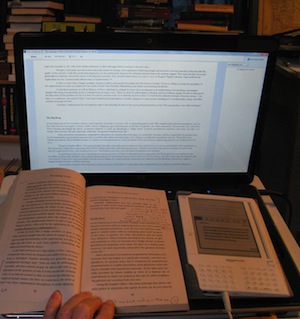
Photo by J Brew.
Footnote: Don’t Hate the Internet, Hate the Game
It would be easy to blame the internet for what appears to be a trend in people with little information and a lot to say, and in fact, some people have tried to claim that it’s access to overwhelming amounts of information at our fingertips that’s making us less interested in reading and absorbing that information and applying it to our world view. We don’t agree, and we don’t even think that the volume of information available to us is the problem, either. A lot of people spend time and money to disconnect, retreat to resorts with no internet access and out of cellular range, and escape from their personal fire hoses of information without realizing that they have complete control over the flow of water from that hose at all times.
When I asked Clay Johnson about whether the internet has a role to play here, he pointed to a 2009 study by the University of California San Diego that says we’re actually reading three times more every day than we did in 1980, and actually argued that the internet saved reading as we know it. “I think we have to think carefully about this concept that somehow our reading comprehension is actually suffering because of the Internet, because it’s fairly clear that we’re reading a lot more,” he noted. One going theory is that we’re trying to do too much at once and it’s multi-tasking that’s killing our attention spans and ability to absorb what we read. Clay noted that there may be something to that theory, but if it holds water, it’s not the internet’s fault for presenting us with a lot of data to pay attention to—in reality, it’s the way we apply and prioritize that information that needs adjustment, not the source of the information.
If anything, the wealth of information on the internet and the discussion available in all corners on all topics simply brings us face-to-face with something that’s been happening for a long time: a lot of people have a lot to say on topics they may not know very much about. The internet just makes us aware of it because it’s everywhere and we’re engaged in more discussions on more topics than ever before. In a time where there’s more information at our fingertips than there ever has been, it’s not the internet’s fault that most of us have an unhealthy relationship with reading and interacting with the things that we read.
One of the best things you can do for your reading comprehensions and for your own ability to think critically about the world around you is to recognize how valuable you time really is, and spend it reading the things that enrich your life. Take those lessons and topics, and learn to focus on them by looking for more information, building your own ideas off of them, and sharing those ideas with others.
These suggestions will help you get started, and once you start, you’ll find that your relationship with reading, both online and offline, is a much more positive, enjoyable one, as opposed to just another thing you have to check off your to-do list.
Clay Johnson is the author of the upcoming book The Information Diet: A Case for Conscious Consumption. He graciously offered his help for this story, and we thank him.
Via Alan Henry @ LifeHacker Contact Alan Henry: Email the Author
Share this:

Mitsubishi Hack Stole Nuclear, Defense Data

When Mitsubishi announced in September it had been hacked in August it was criticized for keeping quiet for a month. Now it appears that the attackers got nuclear power plant and military aircraft details according to sources quoted in the Japanese media.
Share this:
Google Street View Moves Indoors

Google is taking its Street View mapping service indoors with plans moving ahead for 360-degree Business Photos, a program that would send Google photographers to various businesses to snap professional photos for their Places Page. ‘This experience, using Street View technology, includes 360-degree imagery of the business interior and storefront,’ says Google. ‘With this immersive imagery, potential customers can easily imagine themselves at the business and decide if they want to visit in person.’ Photographs are taken by ‘trusted’ photographers, though businesses can also upload their own images via Google Places. It’s starting with businesses ‘that we know are searched for most regularly,’ like restaurants, hotels, retail shops, gyms, salons, and repair shops. Taking internal photos and posting them online brings up some security questions, but Google says its photographs will ‘capture nothing different to what a customer would see by visiting the business in real life.’
Share this:
The Most Common Hiding Places for Workplace Passwords


The Most Common Hiding Places for Workplace Passwords
When I was an IT admin, I had the pleasure of dealing often with people who would submit urgent service requests and then leave for the day, leaving their office empty and computer locked by the time I could get there to help. Fortunately, I was often able to fix their problem while they weren’t there. Why? Their password was somewhere on their desk in one of these easy-to-find locations.
- Under the Keyboard. This is a pretty common one, and one of the first places to look if you need to find someone’s password (or one of the first places to avoid if you need to jot down an often-used but difficult to remember password.) The worst offenders leave them on a post-it on their keyboard tray, or under the spot where their keyboard lives. Others attach the post-it to the underside of the keyboard, thinking it’s better hidden there. In both cases, it’s a sure bet that anything under the keyboard will have a password on it.
- Under the Phone. A surprising number of people still keep their passwords tacked to the underside of their desk phone or its receiver. The people who usually put their passwords here think they’re being smart and stealthy, but in reality taping a yellow post-it note to the underside of your phone just screams “passwords here!”
- Under the Mouse Pad. This is another common hiding place for people who don’t want to put their passwords under their keyboard. They’ll usually slide a couple of sheets of paper under the mousepad with their usernames and passwords on it and refer to them when they forget, or update them when their password expires.
- On the Monitor. This one isn’t so much a “hiding place,” as it’s one of those “security through obscurity” techniques that almost never work. Most often practiced by people who keep dozens of other post-its on their monitor, this technique is still easy to get around as soon as you have physical access to the person’s computer. Besides, it’s not too hard to glance through the post-its on the monitor and find the one that has “u: something/p: something else” on it.
- In the Top Drawer. Most people who work in open offices with short cubicles tend to lock their desk drawers, but colleagues I’ve worked with who had their own offices or had semi-isolated cubicles were almost always guilty of leaving their desk drawers unlocked. When I would visit their offices, the master list of their usernames and passwords were almost always in the top drawer, on a scrap of paper or the top of a thick stack of post-it notes, usually in plain view.
- Under the Desk. One of the most disturbingly common spots many officer workers hide their passwords is one of the easiest to find: right under their desk surface. Just sit down at their desk and put your hand directly under the desktop, and you’ll often find yet another post-it note attached there. Most people who do this operate under the assumption that no one’s ever under their desk to see or notice such a thing—except the IT admin or help desk tech they call when they’ve jostled the Ethernet cable loose from the back of their desktop.
This list isn’t exhaustive: anyone who’s spent time as a field technician or IT admin in an office will tell you that people often leave their passwords in strange places that are easier to find then the user ever hoped they would be.
In many offices, the most common hiding spots for post-it notes and paper scraps laden with login information depend on the office furniture and office layout. For example, if your cubicles have low cabinets right over most users’ monitors, you can expect to find a few people keeping their passwords on the inside of those cabinets. I knew one person who put post-it notes on the bottom of their chair—she was livid when she arrived one morning to find a colleague had borrowed her chair for an impromptu meeting in her office next door.
If you keep your passwords in any of these places, stop now before it’s too late. You may be making your IT admin’s life a little easier when he or she drops by to fix your computer problems, but they know full well you’re sacrificing your organization’s security in the process. Now is a good time to give a service like LastPass, an app like1Password, or one of these great alternatives a try, so you can remember one password and then mix up the passwords you use for other services. While you’re at it, make sure you’re using good, strong passwords.
Do you know an office worker that keeps their passwords on post-its or in notebooks on their desk? How do you keep your passwords safe from prying eyes without compromising their security? Share your tips in the comments. Photo by Juan Martinez.
You can reach Alan Henry, the author of this post, at alan@lifehacker.com, or better yet, follow him on Twitter or Google+.
Share this:

Snuff
Snuff, Terry Pratchett’s latest Discworld novel is an absolute treat, as per usual. It’s a Sam Vimes book (there are many recurring characters in the Discworld series, whose life stories intermingle, braid and diverge — Sam Vimes is an ex-alcoholic police chief who has married into nobility) and that means that it’s going to be a story about class, about law, and about justice, and the fact that Pratchett can make a serious discourse on these subjects both funny and gripping and never trivial is as neat a summary of why we love him as much as we do.
In Snuff, Sam Vimes finds himself dragged off to the countryside for a first-in-his-life holiday, and of course, the holiday only lasts about ten seconds before Vimes is embroiled in local politics, which means local crime. The genteel countryside may be sleepy and backwards, but it is also seething with secrets, with privilege for the gentry, with class resentments, and with racism.
Goblins, you see, are universally reviled, thought incapable of rationality, and loathed for their weird religious habit of retaining all their snot, hair clippings, pus, fingernails and other castoffs (except urine, crap and teeth, strangely) in beautiful handmade pots that are buried with them. Also, they’ve been known to eat their young. Is it any wonder that they’re classed as vermin in law?
Well, yes, because as Sam Vimes discovers, there’s more to the story than the stuff “everyone knows” about goblins, and before you know it, he’s deep underground in a story that includes all the aforementioned, plus a small boy obsessed with learning everything there is to know about poo; a novelist who writes wildly popular icky novels for kids; a clan of corrupt magistrates who make up the law as it suits them; and a clutch of sweet maidens who need to be convinced to leave the drawing room and make their way in the wider world.
And we’re off — fights, chases, riverboats, sea-ships, kidnapping, murder, revenge, and the world belowstairs and above all come to life in a Pratchett novel that has all the things you want from Discworld: compassion, humor, smarts, and action. Thank you, Terry, for another good literary friend to join the rest on my shelf.
Share this:

How to Tell Someone You Don’t Like Them (Without Being an Asshole)

It would be fantastic if we could all just get along, but if you’ve met a handful of people in your life you know that’s not a very realistic expectation. Sometimes, despite your best efforts, you simply have to tell someone that it’s not working out. Whether you’re breaking up with a lover, letting go of a friend, or just trying to shake someone annoying, here’s how to get the awkward job done.
First of all, there’s always more than one way to handle an awkward social situation. No suggestion is going to work every time. You need to survey the atmosphere, consider the person you’re dealing with, and remember your ultimate goal or reason why you’re breaking this bad news. I’ve been in this situation far too often and I’m still a far cry from an expert, so I asked people who are as well as a handful of regular people on the internet. Here’s what I learned.
Be Sure You’re Making the Right Decision
 Rejection is unpleasant for everyone involved, and telling someone you don’t like them is probably one of the worst types. For that reason, you don’t want to make the decision lightly. You should be certain you don’t want this person in your life in a certain capacity or at all before you figure out how to tell them. Doctoral Clinical Psychology student and intern therapist Brian Newton suggests you first consider your goals:
If say a client asked me, “How do I tell X that I don’t like them?” my first question would be why they wanted to tell the person that; what their objective is. There are plenty of people in our lives that we don’t like, but it’s not always effective to tell them that, it doesn’t further our goals. If someone doesn’t like their boss and they need their job, telling them that is probably not effective toward what they actually want. So, in fact, I’d say the more useful question is, “What do I want from this person?”
If you want this person out of your life, you have to consider the situation as well. As Brian notes, telling your boss you don’t like them isn’t going to be terribly helpful. When your goal is to remove your boss from your life, it’s probably a lot easier to just find another job. If you have an annoying co-worker, you’ll probably want to consult with your human resources department before taking any action yourself. Personal relationships offer a little more freedom, but you don’t necessarily want to burn a bridge if unnecessary. Be sure to weigh your options and consider possible outcomes. Sometimes it makes more sense to simply put little effort into a personal relationship than to end it. If you feel ending it is in your best interest, however, read on.
Don’t Be a Douche Bag
 I’d like to think it goes without saying that you shouldn’t be mean when you’re telling someone you don’t like them. After all, the interaction is already unpleasant and even if they feel the same way about you, it’s still something that hurts to hear. That said, I’ve known people to be insensitive simply because it’s easier and I’ve known myself to be mean unintentionally. Sometimes you just screw it up, but you can at least try to be kind. As marriage and family therapist Roger Gil points out, it’s not only the right thing to do but it’s actually in your best interest in the log run:
It’s always important to respect another person’s feelings (as long as they aren’t disrespecting yours or crossing boundaries). Besides, being mean to your “rejectee” might get back to someone you do want to date and give you a “douche bag” reputation.
I’ve probably acquired the “douche bag” label with a few people unintentionally. Sometimes I’ve attempted to be nice, but nice can often come across as misleading. If I’ve learned anything from my mistakes, it’s important to find the line between being firm and being respectful. Being firm is often necessary for clarity and can sound harsh, but it’s generally better than providing people with uncertainty. The confusion ultimately hurts more in the long run.
Prepare Ahead of Time and Plan for Awkward
 As humans, we like to try and remove awkwardness and conflict from every situation but it’s often inevitable. It’s better to understand that some situations will be unpleasant, accept that reality, and believe that a little discomfort now will save a lot of discomfort down the road. There will also be times when you’ll be surprised by someone’s interest, so it can help to have a few responses at the ready to avoid creating additional problems. Robert Gil elaborates:
In preparing canned responses, it’s important to be honest. “I have a boyfriend/girlfriend” or “I’m not looking to date anyone right now” aren’t good responses if they aren’t the truth because if your rejectee sees you behaving very single-like or sees your online dating profile, you just created the awkward situation you wanted to avoid. I would say something like, “I’m really flattered. You seem like a nice person but I just don’t see you that way. I admire your assertiveness, though.” The idea is to state the truth while communicating respect for the other person. If they are relatively “normal”, they’ll take this as a cue to walk away with their pride intact. If they become insistent, don’t respect your wishes, or make a scene, then rest assured that it’s their issue and stick up for yourself in an appropriate way.
When ending a non-romantic relationship, you won’t be able to give a response. You’re going to have to bring up the bad news, and this is always uncomfortable. Of course you want to be as kind and gentle as possible, but when you’re telling you don’t want to be friends it’s important to remember two things: be clear and definitive. When you’re coming up with a prepared response, avoid statements like this:
“I don’t think we can be friends anymore.”
The problem words here are “I don’t think.” This leaves room for interpretation and additional questions that will be uncomfortable to answer. The person you’re rejecting may ask why you don’t think so, then try to provide counterarguments. What works better is a statement like this:
“I don’t want to be friends anymore.”
This sounds harsh to read, and you can certainly preface the statement with a some softer language to make it easier to swallow (e.g. “I need to tell you something difficult and I apologize for saying it like this because I don’t want to hurt you, but I want to be as clear as possible”). Chances are you will be asked to explain why regardless of how you say it, so be prepared to offer an explanation that has more to do with you than it does with them. You don’t want to fall into “it’s not you it’s me” territory, but you also don’t want to leave room for endless questions and argument. Simply stating that you don’t enjoy spending time with them should be more than enough. This is a harsh thing to say, but the alternative can be much worse. You don’t want to spend the next hour explaining every reason why, and they don’t want to hear it. When a person asks a lot of questions it’s generally because they want to try to change your mind. If you’re sure you do not want this person in your life, it’s better to withhold most of the details. Just because you don’t like one (or several) aspects of their personality doesn’t mean somebody else won’t, and there’s no sense in making them think who they are is bad. Unless they exhibit universally terrible behavior and telling them would benefit everyone they ever meet, it’s really not your place to judge another for who they are. The only judgment you want to make is whether or not they are compatible with you.
Understand How People Like to Receive Bad News
 When I asked Lifehacker readers and other people on the web how they would prefer to receive the bad news themselves, the answers varied quite a bit. For the most part, people fell into two camps: either they preferred to hear the bad news quickly and rip the bandage off, or they simply wanted no confrontation whatsoever and wanted to get the tacit message through a lack of contact. So how do you tell what a specific person prefers? You ask.
As awkward as this may sound, it’s actually easy to do in almost any context. When you’re getting to know a person, you simply bring up a situation where you had to break this bad news to someone in the past. All you have to say is that you weren’t sure how to handle it, as that is essentially a request for advice. Whoever you’re talking to will tell you how they’d want to be told, and should you ever need to tell them you don’t like them you’ll know exactly how to go about it. Knowing won’t remove the discomfort from the situation, but at least you can rest-assured you’re not approaching the conversation blindly.
You can prepare as much as you want, but ultimately you don’t know what’s going to happen. Your best efforts could result in a problem. Sometimes you’ll make mistakes and it will be your fault, and sometimes you’ll find the person you’re dealing with is emotionally volatile. It’s a rough situation and it’s okay to feel badly for a little while. If you do, it means you actually give a crap about other people and that’s a good thing. Just don’t dwell on the bad feelings too long. At some point you’ll probably meet somebody who will have to tell you the same thing. They may make mistakes, too, so be forgiving. Nobody’s pefect.
A big thanks goes out to Roger S. Gil, M.A.M.F.T. and Brian Newton, MA, for their contributions to this post. You can follow Roger on Twitter and check out his podcast. If you’re looking for more information on interpersonal skills, Brian recommends reading the Interpersonal Effectiveness section of the book Dialectical Behavior Therapy. You can learn more about it here.
You can follow Adam Dachis, the author of this post, on Twitter, Google+, and Facebook. Twitter’s the best way to contact him, too.
Share this:

Japan’s Largest Defense Contractor Hacked
Mitsubishi Heavy Industries Ltd, Japan’s largest defense contractor, has been a victim of a cyber attack, according to a report from the company. The company said attackers had gained access to company computer systems, with some reports saying the attacks targeted its submarine, missile and nuclear power plant component businesses. According to The Yomiuri newspaper, approximately 80 systems had been infected with malware at the company’s headquarters in Tokyo, as well as manufacturing and research and development sites, including Kobe Shipyard & Machinery Works, Nagasaki Shipyard & Machinery Works and Nagoya Guidance & Propulsion System Works. ‘We can’t rule out small possibilities of further information leakage but so far crucial data about our products or technologies have been kept safe,’ a Mitsubishi Heavy spokesman told Reuters. ‘We’ve found out that some system information such as IP addresses have been leaked and that’s creepy enough,’ the spokesman added.
Share this:
Dating Tips for the Modern Woman.
Share this:
When Clowns become Sages.
I’m a cynic, it helps in my line of work, but despite my resistance, this speech and video truly had an impact. I hope it will for you too.
It’s old and many of who will have seen it various forms over the years, this version may be the best of them all.
The speech itself is from a comedy directed called “The Great Dictator” written by and starring Charlie Chaplin. First released in October 1940, Chaplin plays two characters who look strikingly similar- a jewish barber and a dictator who looks like Adolf Hitler. Near the end of the film, after a series of bizarre incidents, the dictator gets replaced by his look-alike, the barber, and is taken to the capital where he is asked to give a speech.
It’s worth watching because the speech is as relevant today as it was 71 years ago. The full transcript of the speech can be found below the video.
I’m sorry but I don’t want to be an Emperor – that’s not my business – I don’t want to rule or conquer anyone. I should like to help everyone if possible, Jew, gentile, black man, white. We all want to help one another, human beings are like that.
We all want to live by each other’s happiness, not by each other’s misery. We don’t want to hate and despise one another. In this world there is room for everyone and the earth is rich and can provide for everyone.The way of life can be free and beautiful.
But we have lost the way.
Greed has poisoned men’s souls – has barricaded the world with hate; has goose-stepped us into misery and bloodshed.
We have developed speed but we have shut ourselves in: machinery that gives abundance has left us in want. Our knowledge has made us cynical, our cleverness hard and unkind. We think too much and feel too little: More than machinery we need humanity; More than cleverness we need kindness and gentleness. Without these qualities, life will be violent and all will be lost.
The aeroplane and the radio have brought us closer together. The very nature of these inventions cries out for the goodness in men, cries out for universal brotherhood for the unity of us all. Even now my voice is reaching millions throughout the world, millions of despairing men, women and little children, victims of a system that makes men torture and imprison innocent people. To those who can hear me I say “Do not despair”.
The misery that is now upon us is but the passing of greed, the bitterness of men who fear the way of human progress: the hate of men will pass and dictators die and the power they took from the people, will return to the people and so long as men die [now] liberty will never perish…
Soldiers – don’t give yourselves to brutes, men who despise you and enslave you – who regiment your lives, tell you what to do, what to think and what to feel, who drill you, diet you, treat you as cattle, as cannon fodder.
Don’t give yourselves to these unnatural men, machine men, with machine minds and machine hearts. You are not machines. You are not cattle. You are men. You have the love of humanity in your hearts. You don’t hate – only the unloved hate. Only the unloved and the unnatural. Soldiers – don’t fight for slavery, fight for liberty.
In the seventeenth chapter of Saint Luke it is written ” the kingdom of God is within man ” – not one man, nor a group of men – but in all men – in you, the people.
You the people have the power, the power to create machines, the power to create happiness. You the people have the power to make life free and beautiful, to make this life a wonderful adventure. Then in the name of democracy let’s use that power – let us all unite. Let us fight for a new world, a decent world that will give men a chance to work, that will give you the future and old age and security. By the promise of these things, brutes have risen to power, but they lie. They do not fulfil their promise, they never will. Dictators free themselves but they enslave the people. Now let us fight to fulfil that promise. Let us fight to free the world, to do away with national barriers, do away with greed, with hate and intolerance. Let us fight for a world of reason, a world where science and progress will lead to all men’s happiness.
Soldiers – in the name of democracy, let us all unite!
Share this:
Find out Apache Version
 In order to find out apache version, login to your server. Once logged in type the following command to print the version of httpd :
# httpd -v
Sample output:
Server version: Apache/2.2.3
Server built:   Oct 28 2008 07:22:45
Output a list of modules compiled into the server:
# httpd -l
This will not list dynamically loaded modules included using the LoadModule directive. To dump a list of loaded Static and Shared Modules:
# httpd -M
Sample output:
Loaded Modules:
 core_module (static)
 mpm_prefork_module (static)
 http_module (static)
 so_module (static)
 auth_basic_module (shared)
 auth_digest_module (shared)
 authn_file_module (shared)
 authn_alias_module (shared)
 authn_anon_module (shared)
 authn_dbm_module (shared)
 authn_default_module (shared)
 authz_host_module (shared)
 authz_user_module (shared)
 authz_owner_module (shared)
 authz_groupfile_module (shared)
 authz_dbm_module (shared)
 authz_default_module (shared)
 ldap_module (shared)
 authnz_ldap_module (shared)
 include_module (shared)
 log_config_module (shared)
 logio_module (shared)
 env_module (shared)
 ext_filter_module (shared)
 mime_magic_module (shared)
 expires_module (shared)
 deflate_module (shared)
 headers_module (shared)
 usertrack_module (shared)
 setenvif_module (shared)
 mime_module (shared)
 dav_module (shared)
 status_module (shared)
 autoindex_module (shared)
 info_module (shared)
 dav_fs_module (shared)
 vhost_alias_module (shared)
 negotiation_module (shared)
 dir_module (shared)
 actions_module (shared)
 speling_module (shared)
 userdir_module (shared)
 alias_module (shared)
 rewrite_module (shared)
 proxy_module (shared)
 proxy_balancer_module (shared)
 proxy_ftp_module (shared)
 proxy_http_module (shared)
 proxy_connect_module (shared)
 cache_module (shared)
 suexec_module (shared)
 disk_cache_module (shared)
 file_cache_module (shared)
 mem_cache_module (shared)
 cgi_module (shared)
 version_module (shared)
 chroot_module (shared)
 perl_module (shared)
 php5_module (shared)
 proxy_ajp_module (shared)
 python_module (shared)
Syntax OK
Print the version and build parameters of httpd, and then exit
Type the command:
# httpd -V
Sample output:
Server version: Apache/2.2.3
Server built:   Oct 28 2008 07:22:45
Server's Module Magic Number: 20051115:3
Server loaded:  APR 1.2.7, APR-Util 1.2.7
Compiled using: APR 1.2.7, APR-Util 1.2.7
Architecture:   64-bit
Server MPM:     Prefork
  threaded:     no
    forked:     yes (variable process count)
Server compiled with....
 -D APACHE_MPM_DIR="server/mpm/prefork"
 -D APR_HAS_SENDFILE
 -D APR_HAS_MMAP
 -D APR_HAVE_IPV6 (IPv4-mapped addresses enabled)
 -D APR_USE_SYSVSEM_SERIALIZE
 -D APR_USE_PTHREAD_SERIALIZE
 -D SINGLE_LISTEN_UNSERIALIZED_ACCEPT
 -D APR_HAS_OTHER_CHILD
 -D AP_HAVE_RELIABLE_PIPED_LOGS
 -D DYNAMIC_MODULE_LIMIT=128
 -D HTTPD_ROOT="/etc/httpd"
 -D SUEXEC_BIN="/usr/sbin/suexec"
 -D DEFAULT_PIDLOG="logs/httpd.pid"
 -D DEFAULT_SCOREBOARD="logs/apache_runtime_status"
 -D DEFAULT_LOCKFILE="logs/accept.lock"
 -D DEFAULT_ERRORLOG="logs/error_log"
 -D AP_TYPES_CONFIG_FILE="conf/mime.types"
 -D SERVER_CONFIG_FILE="conf/httpd.conf"
To view other configuration settings open httpd.conf file (usually located in /etc/httpd directory).
Red hat, CentOS and Fedora stores httpd at the following location:
# vi /etc/httpd/conf/httpd.conf
Debian and Ubuntu stores httpd.conf in apache2.conf file at the following location:
# vi /etc/apache2/apache2.conf
FreeBSD stores apache2.2 configuration at the following location:
# vi /usr/local/etc/apache22/httpd.conf
If you made any changes to httpd.conf, check httpd syntax for error using the -t option:
# httpd -t
If there are no errors, simply restart Apache web server.


 RobDurdle.com
You must be logged in to post a comment.